

Odd News
Misc · Published November 8, 2026
Why Diwali Lands on a Different Date Every Year
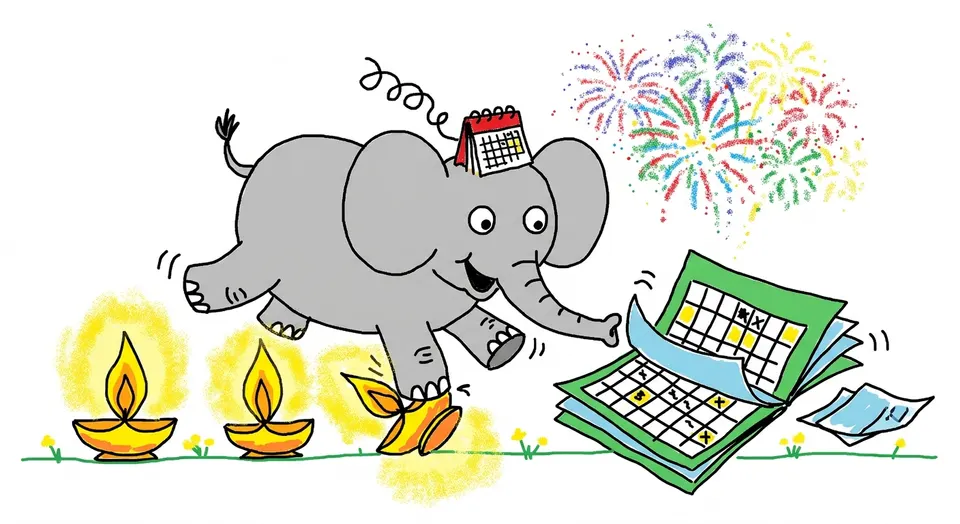 AI doodle
Diwali is a festival of lights celebrated together by Hindus, Sikhs, and Jains. The name comes from the Sanskrit word "Deepavali," meaning "row of lights." People light up their homes inside and out with lamps and candles, and set off fireworks.
The reason the date changes every year is that Diwali follows the Hindu calendar, not the Gregorian one. The Hindu calendar is a lunisolar calendar that takes into account the movements of both the sun and the moon. That's why it doesn't line up neatly with the Western calendar, which is based only on the sun. Diwali can fall in October in some years and in November in others.
The most important day is the new moon night of Kartika, the eighth month of the Hindu calendar. Some people explain that this night is the darkest of the month, which is why the lights look the brightest.
The higher the number, the more useless the story
Uselessly fun?
Key facts
- Diwali follows the Hindu calendar, so its date on the Gregorian calendar changes every year.
- The Hindu calendar is a lunisolar calendar, meaning it tracks both the sun and the moon.
- The most important day falls on the new moon night of Kartika, the eighth month of the Hindu calendar.
Q. If other countries' holidays followed the lunar calendar or the seasons instead of the solar one, how would our everyday calendar change?
Read the originalMental Floss ↗AI read the Mental Floss article and rewrote it in its own words (in Korean, then machine-translated). It is not a translation of the original. It passes our review rules before going up, but please check the original for exact details and photos. Correction or removal requests from rights holders are handled within 24 hours.