
Odd News
Science · Published November 20, 2026
A Toothbrush That Makes Its Own Electricity
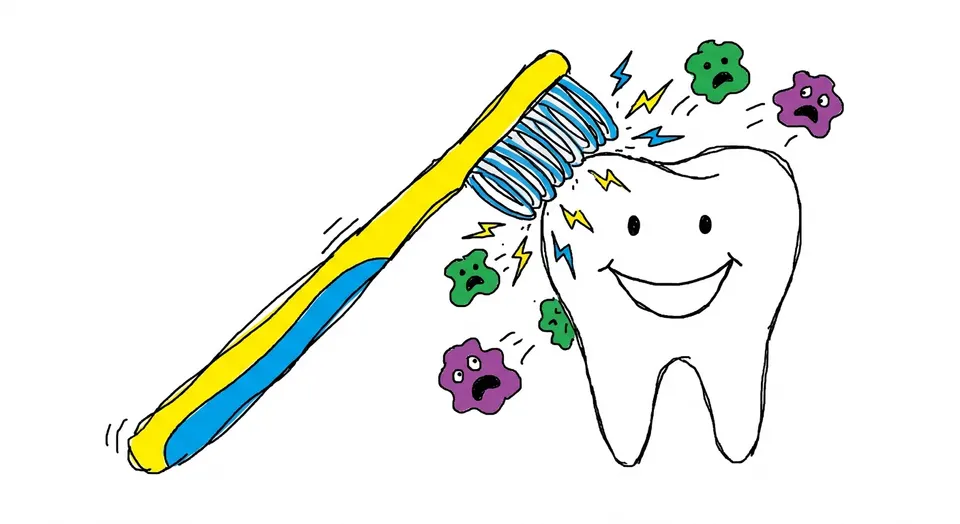 AI doodle
For centuries, the toothbrush has been a tool that mechanically scrubs bacteria away. This study used polyvinylidene fluoride for the bristles, so that electricity is produced each time they bend while brushing. The electricity does not kill bacteria directly. Instead, it creates highly reactive oxygen molecules in saliva, which damage the membranes of plaque bacteria, the cause of cavities and gum disease.
The researchers tested the bristles in the lab against cavity-causing and gum-disease bacteria. The electricity-generating bristles eliminated far more bacteria than regular nylon bristles. In a human trial, participants brushed twice a day for three months. The group using the new brush showed less plaque and less gum bleeding. However, the trial was short, and long-term safety has not yet been confirmed. Attempts to improve toothbrushes have been made before. Antibacterial chemicals did not last long, and rechargeable particles required batteries. In that respect, this approach is unusual.
The higher the number, the more useless the story
Uselessly fun?
Key facts
- Chinese researchers have developed a toothbrush whose bristles generate electricity when they bend.
- That electricity creates reactive oxygen species in saliva, which break down the bacterial film on tooth surfaces.
- In a 3-month trial with 115 participants, plaque and gum inflammation decreased compared with a regular toothbrush.
Q. What if the principle of generating electricity from movement were applied to shoe insoles or backpack straps?
Read the originalSmithsonian Smart News ↗AI read the Smithsonian Smart News article and rewrote it in its own words (in Korean, then machine-translated). It is not a translation of the original. It passes our review rules before going up, but please check the original for exact details and photos. Correction or removal requests from rights holders are handled within 24 hours.