Odd News
Misc · On Wikipedia 2008
Why the Committee for the Five Northern Korean Provinces Runs Offices for Places It Can't Govern
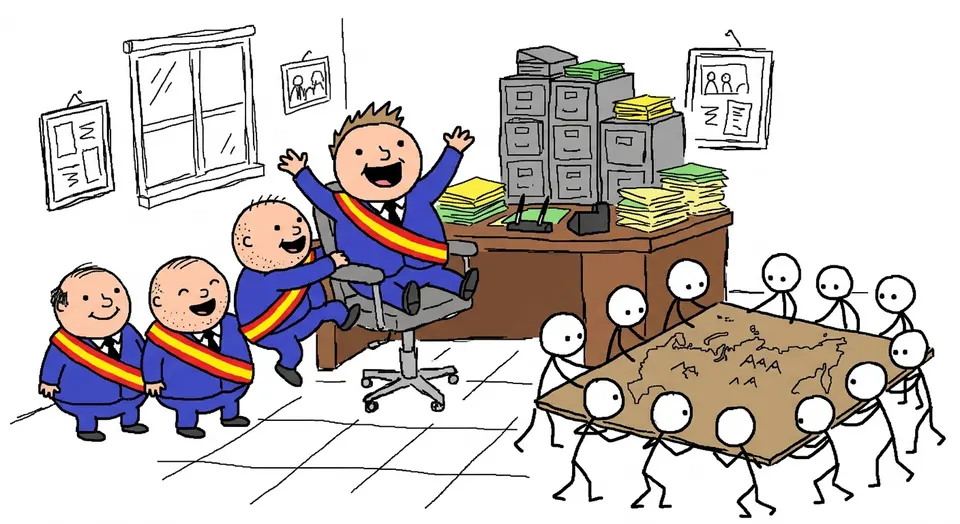 AI doodle
The Committee for the Five Northern Korean Provinces is an administrative body that South Korea set up to jointly handle affairs for five North Korean provinces, along with unrecovered cities and counties in Gyeonggi and Gangwon provinces. The provinces are Hwanghae, South Pyongan, North Pyongan, South Hamgyong, and North Hamgyong, and the boundaries follow the administrative divisions in place at the time of liberation in 1945. It can't provide services to residents, but it exists to prepare for reunification and to symbolically show the South Korean government's position.
The chairmanship rotates among the five provincial governors, one year at a time, so the chair changes whenever the governor holding it does. The first chairman was Baek Yeong-yeop, a pastor with independence movement roots who had served as governor of North Pyongan Province. In July 2026, the North Pyongan governor took over the chairmanship. Heads of the city, county, town, township, and neighborhood offices are appointed as honorary posts rather than elected by residents.
Keeping the administrative system for North Korean land alive on paper in this way reflects an unusual setup, where legal justification and symbolism come before actual authority.
The higher the number, the more useless the story
Uselessly fun?
Key facts
- The Committee for the Five Northern Korean Provinces is an administrative body that jointly handles affairs for five North Korean provinces and unrecovered cities and counties.
- The chairmanship rotates among the five provincial governors, with each serving one year.
- Its purpose is to symbolically maintain administrative structures for land that Seoul doesn't effectively control.
Q. What would change if land Seoul doesn't effectively control were recorded as administrative units?
Read the originalKorean Wikipedia ↗This story was rewritten from a Korean Wikipedia article, so it's used under CC BY-SA 4.0 (attribution, share alike).
AI read the Korean Wikipedia article and rewrote it in its own words (in Korean, then machine-translated). It is not a translation of the original. It passes our review rules before going up, but please check the original for exact details and photos. Correction or removal requests from rights holders are handled within 24 hours.