
Odd News
Science · Published November 14, 2026
Permafrost Thaws, and Landslides Follow
ⓘ This story involves death or an accident.
 AI doodle
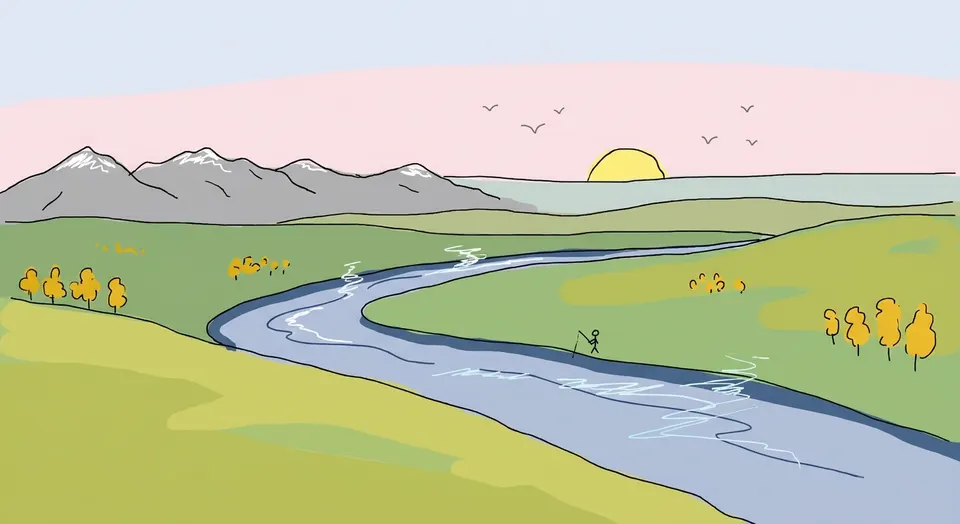
In 2017 and 2018, huge chunks of soil and rock came crashing down in the Mackenzie Valley of the Northwest Territories, Canada. One of them blocked a river and even formed a lake. Researchers classified these events as a new type of landslide called a "permafrost-detachment landslide." Permafrost is ground that stays frozen all year round.
The cause can be traced back to a major wildfire in 1995. The fire burned the vegetation that had shaded the ground, and the heat that reached the surface gradually worked its way down to the deepest frozen layers over about 20 years. As the frozen ground thawed and cracked, water seeped into the gaps and melted the ground even further. Eventually, the mass of earth broke away from below.
Researchers point out that this process doesn't happen overnight. Slopes often show signs of slow movement over several years, so careful monitoring could help predict the danger in advance.
The higher the number, the more useless the story
Uselessly fun?
Key facts
- In 2017 and 2018, two major landslides occurred in the Northwest Territories of Canada.
- Researchers suggest that after a 1995 wildfire wiped out the forest canopy, the ground underneath slowly thawed, and the slope finally gave way about 20 years later.
- Scientists think this kind of "permafrost-detachment landslide" could become more common as global warming continues.
Q. Can we find other disasters in our daily lives that strike with a long time delay?
Read the originalSmithsonian Smart News ↗AI read the Smithsonian Smart News article and rewrote it in its own words (in Korean, then machine-translated). It is not a translation of the original. It passes our review rules before going up, but please check the original for exact details and photos. Correction or removal requests from rights holders are handled within 24 hours.