
Odd News
History · Published November 13, 2026
The Curiosity Hiding in Thomas Browne's Index
 AI doodle
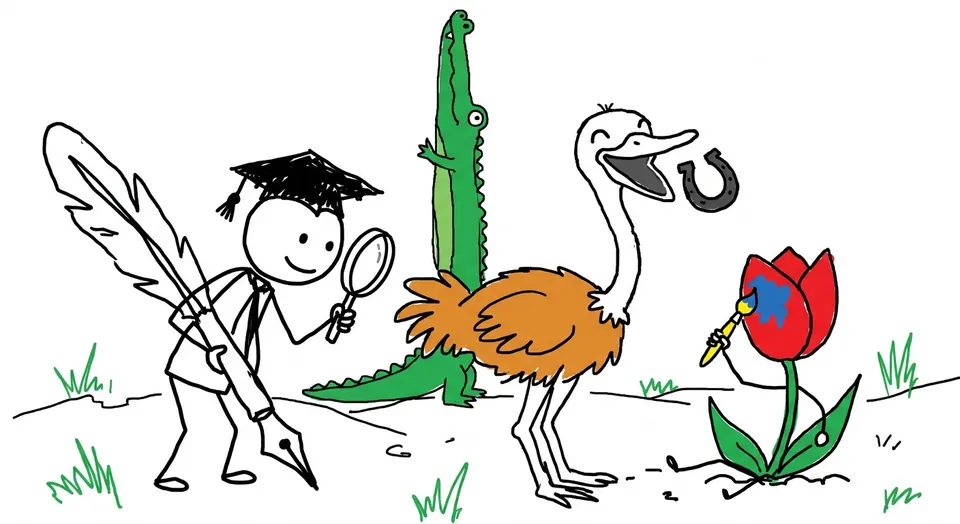
Thomas Browne (1605–1682), an English polymath, seems to have been curious about nearly everything. An index to his collected works, published in 1835, shows just how wide his interests were. Its entries run from the belief that monkeys cannot stand upright, to the claim that crocodiles grow all their lives, to the record that ostriches digest iron.
Many of these entries have since been shown to be untrue. The idea that storks live only in free countries and the explanation that tulips have no blue are both on that list. Still, the index shows what people of the time wondered about and what they believed. It is not very practical. What it does reveal is how broad, and how delightfully odd, curiosity could be.
The higher the number, the more useless the story
Uselessly fun?
Key facts
- The index of works by Thomas Browne, a 17th-century English polymath, covers a wide range of topics.
- Entries like crocodiles grow throughout their lives, ostriches digest iron, and tulips lack blue are among the most notable.
- Most of these ideas are now known to be wrong, but they show how far the knowledge of the time reached.
Q. Which of the things we take for granted today will end up as a laughing stock in an index 100 years from now?
Read the originalFutility Closet ↗AI read the Futility Closet article and rewrote it in its own words (in Korean, then machine-translated). It is not a translation of the original. It passes our review rules before going up, but please check the original for exact details and photos. Correction or removal requests from rights holders are handled within 24 hours.