

Odd News
Places · Published November 20, 2026
The rock crack that thunders when the waves come in
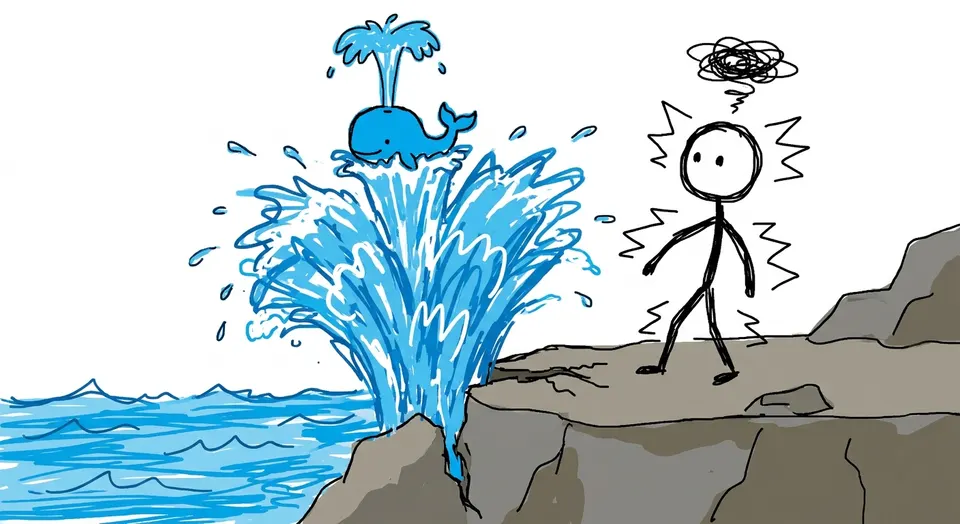 AI doodle
Along the ocean side of Acadia National Park in Maine, USA, a narrow crack cuts into the rocky shoreline. It's called Thunder Hole. Thousands of years ago, glacial activity reportedly left a small fissure in the solid granite cliff, and over time it was worn down into the roughly 3-meter-wide channel seen today.
When the tide rises and the waves get strong, water rushes up this channel and into a small underwater cave at the end. As the wave presses on the air inside the cave, the trapped air rushes out all at once. It's a bit like water spraying from a whale's blowhole. In that moment, a booming sound rings out and a column of water shoots high.
The sound and the spout come not just from the force of the sea but from the compression and release of the trapped air. Visitors are usually told the best time to see it is about two hours before high tide.
The higher the number, the more useless the story
Uselessly fun?
Key facts
- It's Thunder Hole, a rock crack on the coast of Acadia National Park in Maine, USA.
- At high tide, waves surge into the crack and push into a small underwater cave, squeezing the air trapped inside.
- The compressed air blasts out like a whale's blowhole, creating a thunder-like boom and a water spout up to 12 meters high.
Q. If you applied the principle of trapped air being forcefully released to other objects, what kind of sound would you get?
Read the originalAtlas Obscura ↗AI read the Atlas Obscura article and rewrote it in its own words (in Korean, then machine-translated). It is not a translation of the original. It passes our review rules before going up, but please check the original for exact details and photos. Correction or removal requests from rights holders are handled within 24 hours.