
Odd News
Life · On Wikipedia 2008
Why the belief that sleeping in front of a fan can kill you seems to exist only in Korea
ⓘ This story involves death or an accident.
 AI doodle
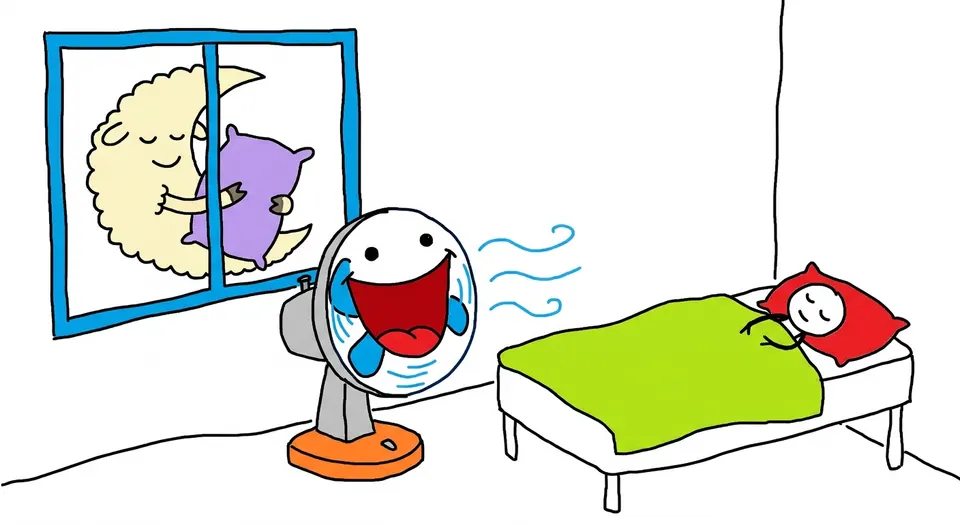
The "fan death" belief holds that if you fall asleep in a sealed room with a fan blowing at your face, you could die. Healthy people usually wake up when they feel cold, so they're fine, but the claim goes that people with weaker immune systems, like the elderly, people who have been drinking, and people with heart or cerebrovascular conditions, are at risk.
The medical community is divided. Some studies suggest that dust and harmful substances in indoor air can be blown around by a fan and trigger respiratory illness. Still, most say there is hardly any scientific evidence that a fan alone can kill someone. Experts also explain that to die from hypothermia, your body temperature would have to drop by nearly 10 degrees Celsius overnight, which is unlikely from an ordinary fan's breeze.
Meanwhile, in 2010 Korea's Supreme Court ruled that the death of someone who fell asleep with the air conditioner on did not qualify for insurance payouts unless hypothermia was proven. The belief persists, but no study has yet clearly identified the cause.
The higher the number, the more useless the story
Uselessly fun?
Key facts
- A superstition has spread widely in Korea that sleeping in a sealed room with a fan aimed at your face can cause death.
- Expert opinions are split. Many say there's no proven medical basis, while some point to the possibility of respiratory problems.
- In a case involving a death after sleeping with the air conditioner on, a court ruled that without proof of hypothermia, the death did not qualify for insurance payouts.
Q. What kind of evidence would it take to test an everyday belief that's never been proven?
Read the originalKorean Wikipedia ↗This story was rewritten from a Korean Wikipedia article, so it's used under CC BY-SA 4.0 (attribution, share alike).
AI read the Korean Wikipedia article and rewrote it in its own words (in Korean, then machine-translated). It is not a translation of the original. It passes our review rules before going up, but please check the original for exact details and photos. Correction or removal requests from rights holders are handled within 24 hours.