

Odd News
Science · On Wikipedia November 6, 2026
World Mosquito Day: the day we learned mosquitoes spread malaria
ⓘ This story involves death or an accident.
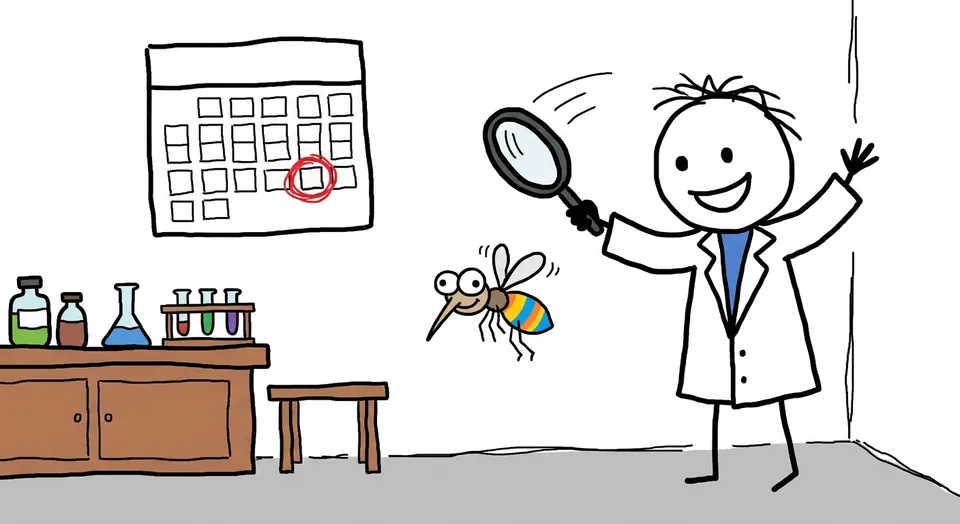 AI doodle
World Mosquito Day honors Ronald Ross, the British doctor who discovered in 1897 that female Anopheles mosquitoes pass malaria between people. Without knowing the carrier, there was almost no way to stop the disease from spreading. In the 19th century, nearly half of the world's population was reportedly at serious risk of malaria.
In 1894, Ross started experimenting on birds and watched the parasite develop inside the mosquito's gut. The work was done in a small lab in Secunderabad, India. Today, the site survives as a research institute and small museum named after him.
The London School of Hygiene & Tropical Medicine marks the day every year with parties, exhibitions and other events. It all began in 1931 with a tea party held in Ross's honor.
The higher the number, the more useless the story
Uselessly fun?
Key facts
- August 20 is World Mosquito Day every year.
- It commemorates British doctor Ronald Ross, who discovered in 1897 that female Anopheles mosquitoes spread malaria.
- He had been running experiments on mosquitoes since 1894.
Q. Where could the lesson that something small can carry a huge danger be applied today?
Read the originalKorean Wikipedia ↗This story was rewritten from a Korean Wikipedia article, so it's used under CC BY-SA 4.0 (attribution, share alike).
AI read the Korean Wikipedia article and rewrote it in its own words (in Korean, then machine-translated). It is not a translation of the original. It passes our review rules before going up, but please check the original for exact details and photos. Correction or removal requests from rights holders are handled within 24 hours.