
Odd News
Animals · Published November 17, 2026
Sea turtle nests found on a US West Coast beach for the first time, and the hatchlings made it back to the ocean
ⓘ This story involves death or an accident.
 AI doodle
In September, two sea turtle nests were discovered on a California beach. It was the first time nests had been confirmed in the wild on the US West Coast. As a tropical storm approached, researchers moved more than 200 eggs to the Pacific Aquarium. They were placed in sand incubators in a room with controlled temperature and humidity, to recreate conditions similar to nature.
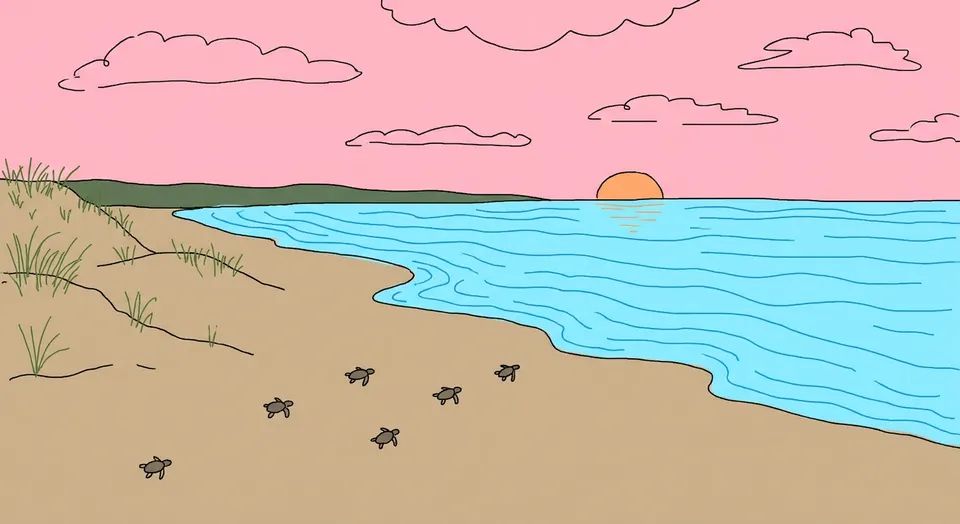
From the night of November 12, cracks began to appear on the sand's surface, signaling the eggs were hatching. Starting the next evening, the baby turtles crawled out one after another. Fifty-four came out of a single nest alone. Hatchlings orient toward the sea by following the moonlight, so the release was carried out in the early hours before daybreak.
The survival rate for olive ridley sea turtles to reach adulthood is estimated at roughly 1 in 1,000. There is a period when the hatchlings swim nonstop for 24 to 48 hours after reaching the ocean. Why these turtles ended up as far north as California has not been firmly established. Possible explanations include getting lost in a storm, or a strong El Niño in the Pacific shifting water temperatures and currents and pushing them north. Some also suggest that decades of conservation efforts, such as fishing protections, may have helped their population grow, which could be part of the story.
The higher the number, the more useless the story
Uselessly fun?
Key facts
- Two sea turtle nests in the wild were found on a California beach for the first time.
- More than 200 eggs were moved to an aquarium to hatch, and the baby turtles were released back into the ocean before dawn one weekend.
Q. Just as the hatchlings find the sea by following moonlight, could we learn to read the signals nature gives us and apply that to our everyday lives?
Read the originalSmithsonian Smart News ↗AI read the Smithsonian Smart News article and rewrote it in its own words (in Korean, then machine-translated). It is not a translation of the original. It passes our review rules before going up, but please check the original for exact details and photos. Correction or removal requests from rights holders are handled within 24 hours.