
Odd News
Places · Published November 17, 2026
The Agnese Visconti memorial plaque in Mantua's palace square
ⓘ This story involves death or an accident.
 AI doodle
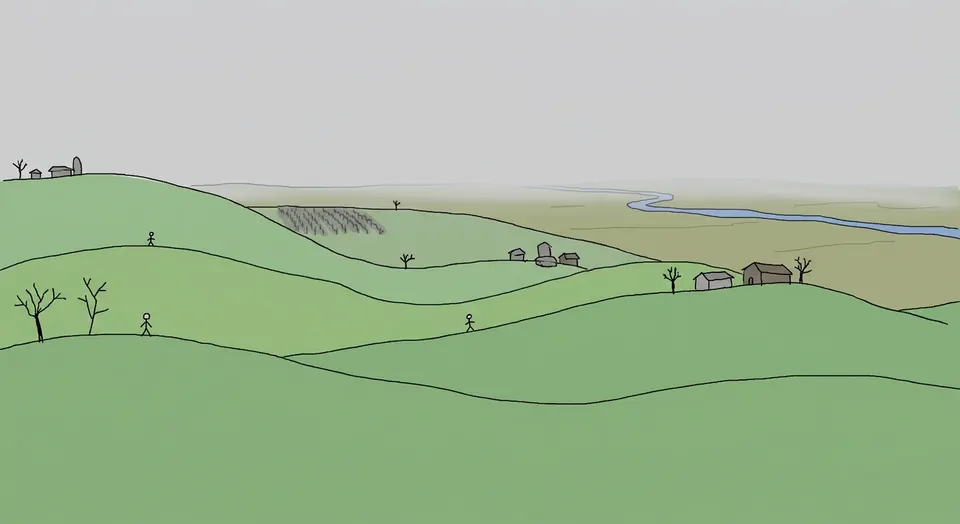
Inside the grounds of the Ducal Palace of Mantua is a quiet, tree-lined square called Piazza Palone. Most visitors walk right by a small stone plaque on the wall here. It marks one of the darkest episodes in Renaissance Mantua. On February 7, 1391, Agnese Visconti, daughter of Milan's lord Bernabò Visconti, was beheaded on this spot.
Agnese had married Francesco I Gonzaga, lord of Mantua, at the age of fourteen. Twelve years later, her husband accused her of adultery with a knight named Antonio da Scandiano. The knight was hanged in the square, and Agnese, then twenty-eight, was beheaded in the same place. Historians largely see the accusation as a political setup: Gonzaga reportedly wanted to cut ties with the Visconti family and forge a new alliance with the Republic of Venice. The bodies of the two were buried informally in the ground of the square rather than in consecrated ground.
That unjust death became part of the square's lore and grew into one of the best-known ghost stories in Lombardy. On cold February nights, the month she died, thick fog is said to roll in from the Mincio River and settle over the palace courtyard, and her shadow reportedly appears near the plaque. Some versions say a headless spirit wanders the square searching for her missing head. Passersby have described heavy footsteps, the rustle of old garments, and sobbing that cuts off abruptly right in front of the plaque.
The plaque itself has a funny flaw. Installed in the 19th century, it carries the wrong age for Agnese at the time of her execution. Even through restoration work, the error was never corrected and remains carved into the marble.
The higher the number, the more useless the story
Uselessly fun?
Key facts
- On February 7, 1391, Agnese Visconti was beheaded in Piazza Palone, the square next to the Mantua palace.
- A 19th-century plaque honoring the event hangs on the square's wall, and legend has it that a ghost appears in front of it.
- The plaque lists the wrong age for Agnese at the time of her execution, and that mistake was left in place even after restoration.
Q. Is it right to leave a small error on a historical monument uncorrected? What about applying that to other landmarks?
Read the originalAtlas Obscura ↗AI read the Atlas Obscura article and rewrote it in its own words (in Korean, then machine-translated). It is not a translation of the original. It passes our review rules before going up, but please check the original for exact details and photos. Correction or removal requests from rights holders are handled within 24 hours.