
Odd News
People & culture · Published November 6, 2026
The Pachinko Parlor Caught Turning Marbles into Cash Through a Loophole
 AI doodle
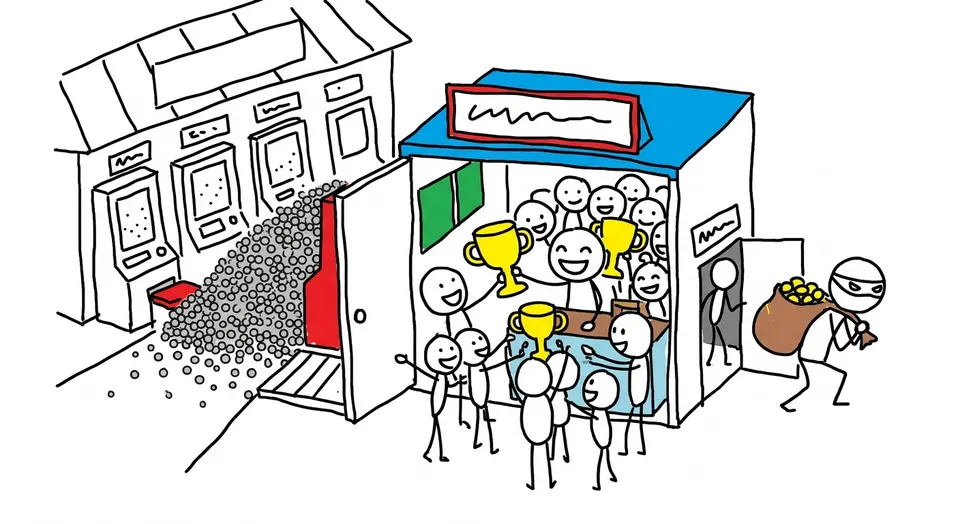
Japanese pachinko parlors don't hand out cash. Players win steel balls based on how the game goes, then trade those balls at an exchange counter inside the shop for 'special prizes.' The prizes are ordinary items like ballpoint pens or lighters, though lately many parlors offer cards with a bit of gold inside. Near the parlor there's usually a shop that buys these prizes back at far more than their actual value, and a wholesaler then buys the goods back at close to cost and sells them to the pachinko parlor again. Because these three operate separately, the setup is called 'santen hoshiki,' or the three-point system.
In this case, the parlor skipped that chain and bought the customers' prizes directly, giving them cash value. That was the problem, since it undermined the premise on which pachinko is recognized as not being gambling in Japan. Bringing the same mechanism to other gaming venues would get you punished right away. Casinos that give out even a single souvenir can face a suspension of operations, and prizes from crane games at game centers can't exceed a wholesale value of 1,000 yen.
The reason pachinko gets this special treatment goes back to its postwar history, when it became a livelihood for many Korean residents in Japan. When the yakuza moved in, police chose to regulate the industry and drive out the criminal groups rather than shut the parlors down entirely. The industry that grew from there employed hundreds of thousands of people at its peak. Today, with integrated resorts legalizing casinos and parlors dwindling, analysts say pachinko's future looks uncertain.
The higher the number, the more useless the story
Uselessly fun?
Key facts
- A pachinko parlor in Ishinomaki, Miyagi Prefecture, was indicted for paying out cash-equivalent prizes by getting around the 'three-point system.'
- The shop bought four special prizes for 3,500 yen, and the 71-year-old manager has admitted to the charges.
- Because pachinko is built on the interpretation that it isn't legally gambling, this kind of structure was needed in the first place.
Q. Where else has a middle step meant to prevent cash exchange ended up making regulation even more complicated?
Read the originalSoraNews24 ↗AI read the SoraNews24 article and rewrote it in its own words (in Korean, then machine-translated). It is not a translation of the original. It passes our review rules before going up, but please check the original for exact details and photos. Correction or removal requests from rights holders are handled within 24 hours.