

Odd News
Misc · On Wikipedia November 5, 2021
The Languages That Call Blue and Green by the Same Name
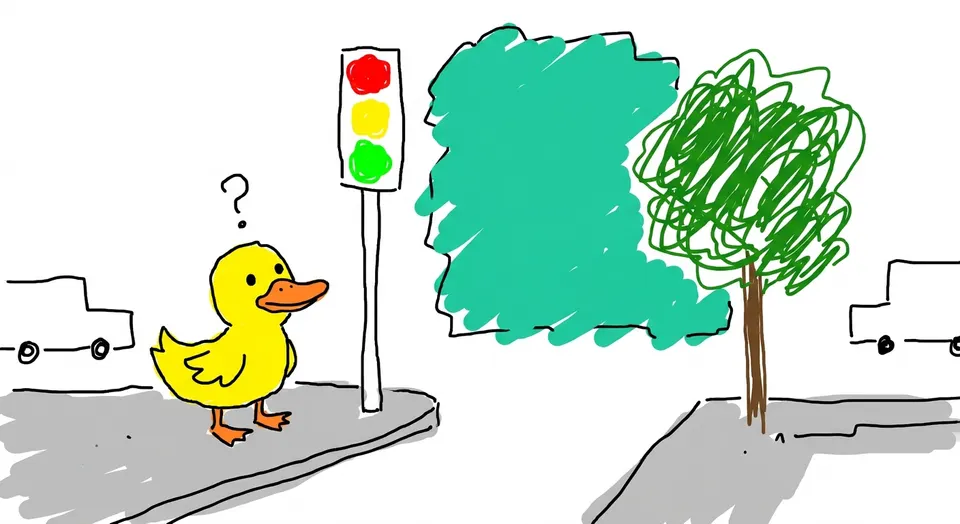 AI doodle
Languages don't all name colors the same way. According to research by Brent Berlin and Paul Kay published in 1969, when a language adds color names, it tends to separate white and black (or light and dark) first. Then it splits off red, and green or yellow, and finally separates blue and green, or so the theory goes.
In Vietnamese, the green of leaves and the blue of the sea are both called 'xanh.' Speakers only add a qualifier like 'xanh lá cây' or 'xanh dương' when they need to be specific. Korean 'pureuda' works the same way, wrapping up both the sky and the forest. Still, 'chorok' (green) is a Sino-Korean word, and some people argue about whether it should be used instead of the native 'pureuda.'
Russian takes the opposite approach and splits the blue range. Light blue, 'goluboy,' and dark blue, 'siniy,' are treated as separate color names. It doesn't count them as just different shades of the same blue.
The higher the number, the more useless the story
Uselessly fun?
Key facts
- Korean 'pureuda' covers everything from blue to green
- Many languages, including Vietnamese and Setswana, use one word for both blue and green
- Russian gives light blue and dark blue different color names
Q. Are there other areas, like color names, where each culture draws the dividing lines in its own way?
Read the originalKorean Wikipedia ↗This story was rewritten from a Korean Wikipedia article, so it's used under CC BY-SA 4.0 (attribution, share alike).
AI read the Korean Wikipedia article and rewrote it in its own words (in Korean, then machine-translated). It is not a translation of the original. It passes our review rules before going up, but please check the original for exact details and photos. Correction or removal requests from rights holders are handled within 24 hours.