
Odd News
History · Published November 17, 2026
The Old Words That Once Described Single People
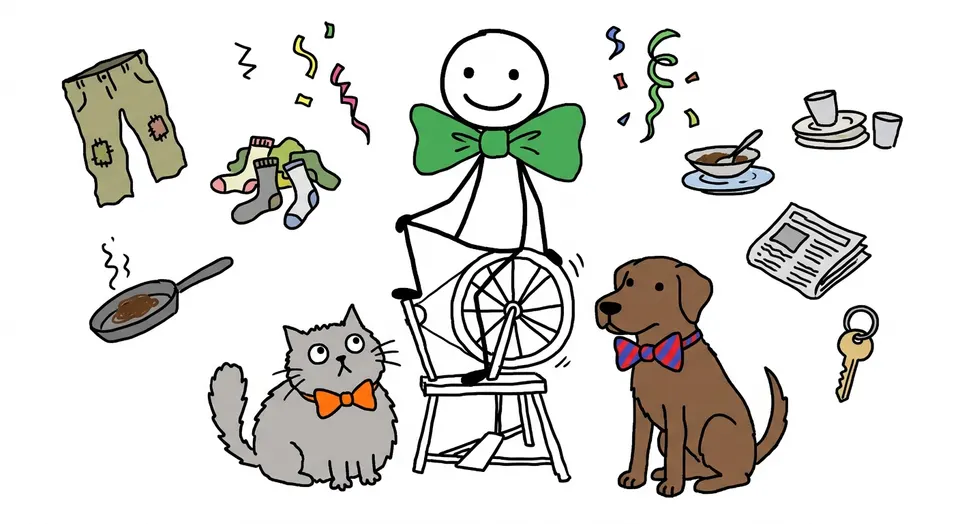 AI doodle
Bachelor, the word for an unmarried man, came into English from Old French. It originally meant a young man in general, especially a squire in training to become a knight. By the 14th century it had settled into the meaning of a young man without a partner. The feminine form, bachelorette, didn't appear until the late Victorian era, roughly 500 years later.
The dictionary holds plenty of less familiar words for singleness, too. Agamist, from the Greek gamos meaning marriage, refers to someone who hasn't married or who has deliberately chosen not to. Shakespeare's phrase "leading apes in Hell" was thought to be the punishment awaiting women who died without children. That idea gave rise to the 17th-century English nickname ape-leader for unmarried women. In France, women who were still single at age 25 were called catherinettes on November 25, the feast day of Saint Catherine. Saint Catherine was regarded as the patron saint of unmarried women, based on the story that she steadfastly refused the proposals of a Roman emperor.
In the 17th century, pussock referred to an older unmarried woman past marriageable age, and tabby referred to an elderly woman living alone. These cat-derived words were used as a group. Old bachelor described an older man who had deliberately chosen to remain single. In the 19th century it was shortened to old bach, which remained in use into the early 1900s. Solitudinarian, for someone who wants to be alone, is recorded from 1691 and was used rarely, mostly in formal writing.
The best-known word, spinster, has been used since the Middle Ages. In the 17th century, the image spread of an unmarried woman spending her life spinning and weaving. In the Victorian era, spinster was sometimes shortened to spin. The nickname tea-bottle, mocking a spinster who drank a lot of tea, emerged in the early 1900s. Thornback refers to several creatures with spines along their backs. Combined with the practice of calling young sticklebacks maids, and with the phrase old maid, it became a joke aimed at single women in the 1600s.
The higher the number, the more useless the story
Uselessly fun?
Key facts
- Bachelor, the word for an unmarried man, came into English from Old French and originally meant any young man in general.
- English in the 16th and 17th centuries had several nicknames for single people that drew on associations with cats, prickly fish skin, and spinning.
- Some of these words are still used today, but most have become obsolete, and some carried sexist undertones.
AI read the Mental Floss article and rewrote it in its own words (in Korean, then machine-translated). It is not a translation of the original. It passes our review rules before going up, but please check the original for exact details and photos. Correction or removal requests from rights holders are handled within 24 hours.