
Odd Memes
Suyasuya-kyo (スヤスヤ教): The Japanese Meme That Invented a 'Sleep Religion' to Avoid Getting Chewed Out
Turning down overtime or a company dinner with 'religious reasons'? A Japanese internet joke that flipped the whole web upside down.
 AI doodle
What does this meme mean?
- Meaning
- How it's used
AAre you coming to the weekend company dinner?
BSorry, my Suyasuya-kyo faith requires me to protect my sleep time.
- When it took off
- It started on October 14, 2024, with a post on X by a user called 'みねるば.' About a week later it had gathered nearly 150,000 likes, and it was later covered by news outlets and TV programs.
Where it came from
The origin is pretty relatable. The creator reportedly saw posts from people stuck in brutal 'black company' jobs who couldn't refuse absurd demands, and thought: 'If there were a religion that let you turn down annoying stuff, wouldn't some people be saved?'
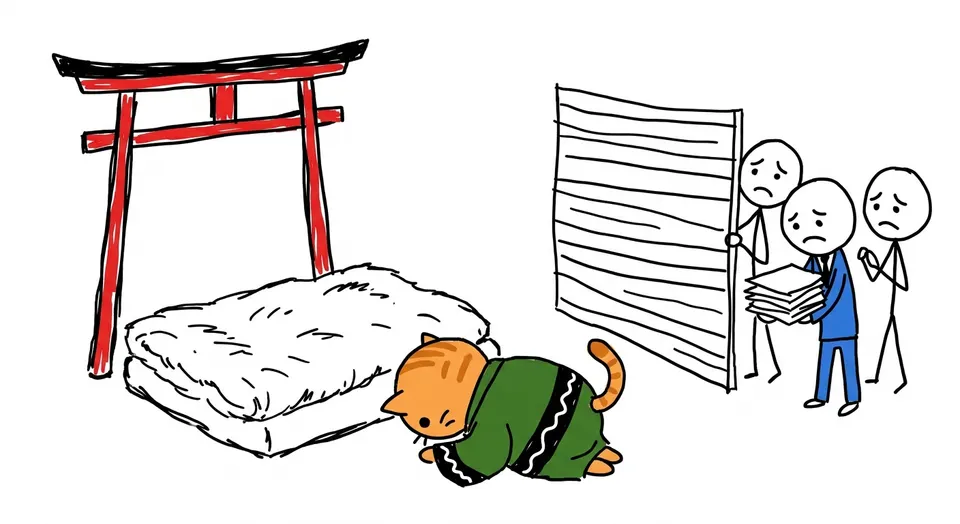
So they made a faith whose core doctrine is 'sleep properly.' The rules are surprisingly strict. The creator's notes include prohibitions like: don't force your beliefs on others, don't extort money, and don't maliciously take away someone else's sleep. It's a role-play faith, but it still keeps basic ethics intact.
The media picked it up, too. Impress Watch introduced it as a viral take on dodging annoying tasks by framing that attitude as a religious matter, and the Yomiuri Shimbun Online covered it as an internet trend that treats futons as sacred objects and sleep as a sacred rite. In December 2024, ABEMA Prime also featured it as an example of the debate around parody religions. The broadcast showed that many people liked it, but also presented criticism that it seems to mock people who actually have real faiths.
Religious scholar Ryosuke Okamoto explained that parody religions are often created to satirize the excesses of established religions, and also pointed out how special the phrase 'for religious reasons' feels in society. Jodo Shinshu priest Takuma Monjushiro said there's something interesting about new forms of religious expression, but questioned whether people making this kind of joke are prepared to accept the criticism that comes with it.