
Odd News
History · On Wikipedia 2011
How the Gyeongin Line Became Korea's First Double-Track Railway
 AI doodle
Korea's railway history started with the Gyeongin Line, which opened on September 18, 1899. After that, many of the main trunk lines were built during the Japanese colonial period, mostly for military and political purposes. After liberation, trunk lines were built with foreign loans and rolling stock was imported, laying the groundwork for the system.
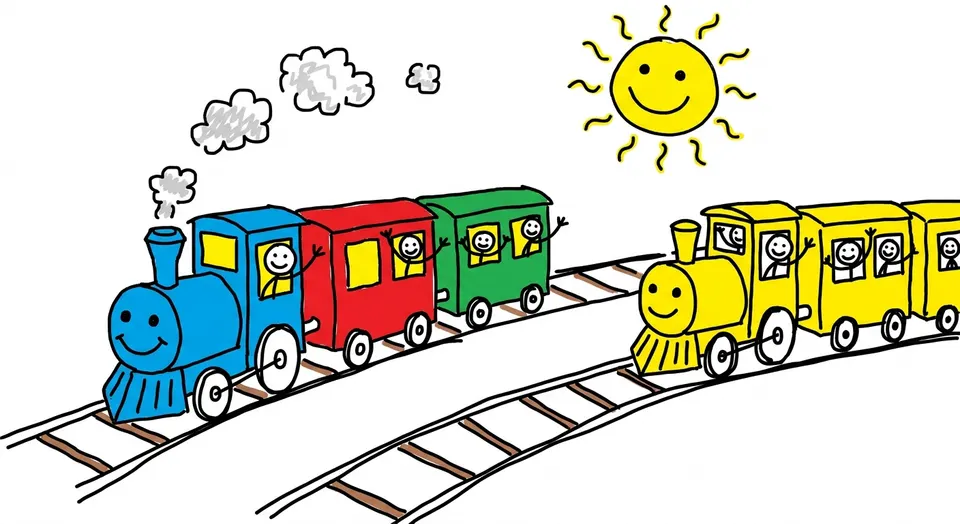
During the industrialization of the 1960s and 70s, railways were the backbone of passenger and freight transport. Electrification and faster trains like the Saemaeul-ho also appeared around this time. As part of this wave, the Gyeongin Line became the first line in the country to finish double-tracking, in 1965.
Since then, railways have grown into high-speed rail and urban rail networks. The news about one line getting double tracks may be short, but it packs a whole country's transport history into a few lines.
The higher the number, the more useless the story
Uselessly fun?
Key facts
- Korea's railway history began with the Gyeongin Line, which opened in 1899.
- The Gyeongin Line completed its double-tracking in 1965, becoming the first double-track line in the country.
- During the Japanese colonial period, railways were laid mainly for military and political purposes, and later expanded alongside industrialization.
Q. What changes has an old road in your neighborhood gone through to become what it is today?
Read the originalKorean Wikipedia ↗This story was rewritten from a Korean Wikipedia article, so it's used under CC BY-SA 4.0 (attribution, share alike).
AI read the Korean Wikipedia article and rewrote it in its own words (in Korean, then machine-translated). It is not a translation of the original. It passes our review rules before going up, but please check the original for exact details and photos. Correction or removal requests from rights holders are handled within 24 hours.