
Odd News
History · Published October 26, 2026
An electric car hit the streets of a small German town in 1888, way too early
 AI doodle
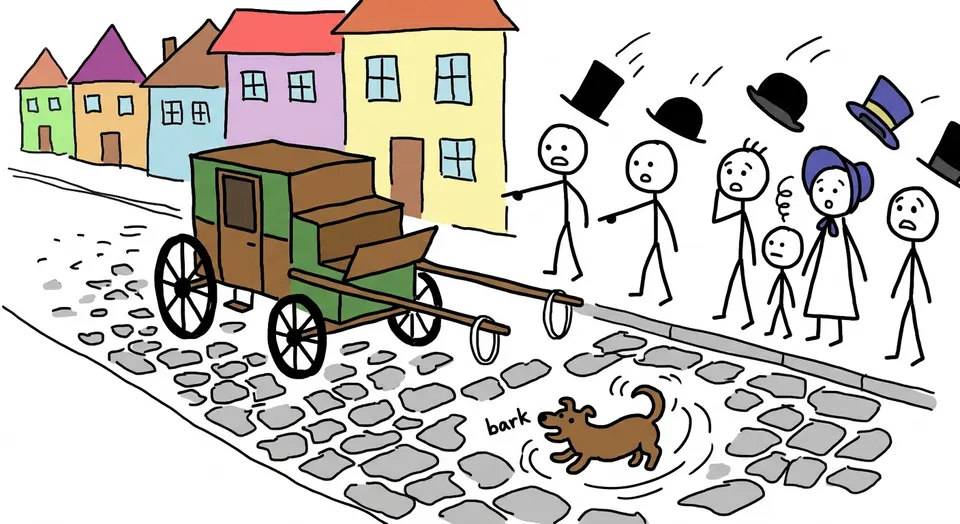
Electric cars are older than many people think. In 1888, a four-wheeled machine with a wooden body appeared on the streets of Coburg, a small town in Germany. It ran on electricity instead of an internal combustion engine. This machine was the Flocken Elektrowagen.
Inventor Andreas Flocken was an engineer who ran a factory that made agricultural machines. He built a separate electric drive unit and made the car himself. The battery sat over the front wheels. A leather belt sent power to the rear wheels. It's said the car even had headlights. The battery was heavy, so the car couldn't go far. That was the big obstacle for 19th-century electric cars.
Electric vehicles had come before this, though. In 1881, Trouvé of France built an electric tricycle. So calling Flocken's car the "first in the world" isn't really accurate. Still, it's an early example of a four-wheeled vehicle running on public roads.
The Flocken company stopped making cars in 1903. In the meantime, internal combustion cars quickly took over the market. Unlike Benz, Daimler, or Ford, Flocken is barely mentioned in history books. His car never led to mass production, and few records of it survive.
The higher the number, the more useless the story
Uselessly fun?
Key facts
- In 1888, the Flocken Elektrowagen, a four-wheeled electric car, ran in Coburg, Germany.
- It weighed about 400 kg and reached a top speed of roughly 15 km/h, with battery capacity as its main limit.
- Its inventor, Andreas Flocken, never became widely known and died in 1913.
Q. If you took today's EV battery problem and moved it to another field, what would be the equivalent roadblock?
Read the originalAmusing Planet ↗AI read the Amusing Planet article and rewrote it in its own words (in Korean, then machine-translated). It is not a translation of the original. It passes our review rules before going up, but please check the original for exact details and photos. Correction or removal requests from rights holders are handled within 24 hours.