
Odd News
History · Published November 16, 2026
The Story of Optical Illusions That Have Been Fooling Our Brains Since Ancient Cave Art
 AI doodle
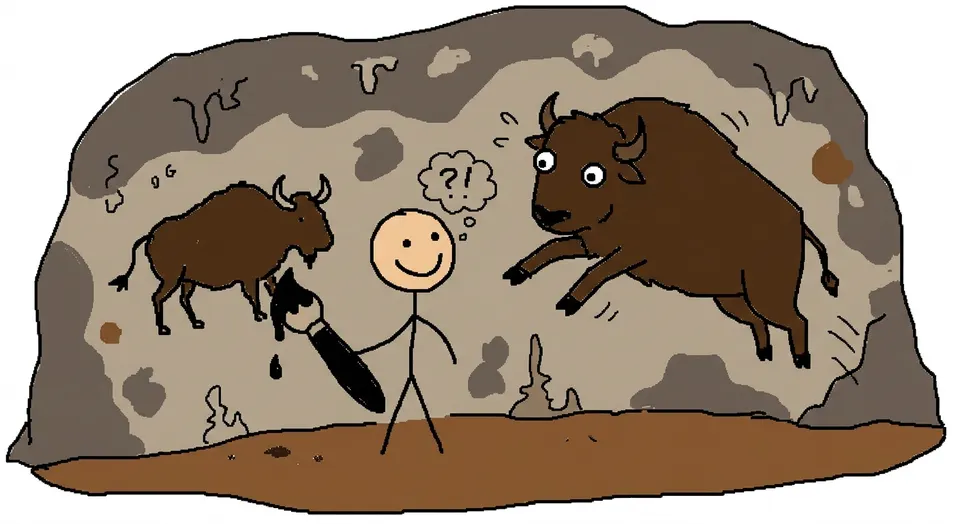
Optical illusion pictures have a simple trick: they show one thing at first, then suddenly reveal something completely different once you look a little longer. The fun goes way back. According to museum records, the earliest known illusions appear in cave paintings from about 30,000 years ago, where lines were drawn to cross each other or add a sense of movement, making it hard for the brain to settle on a single reading.
Around 500 BCE, the Greeks tried illusions through architecture. They arranged mosaic patterns carefully and built the Parthenon with slightly curved columns so that straight lines didn't appear to sag. During the Renaissance, linear perspective and distorted images came into play, giving flat surfaces a sense of depth or creating shapes that only made sense from a particular angle. Leonardo da Vinci's 'The Last Supper' and the smile in 'Mona Lisa' are often cited as works that use techniques where the image can look different depending on where you stand.
In the 19th century, as psychology developed, illusions became a tool for studying the brain. Researchers used pictures built on differences in size, contrast and brightness to figure out how the brain handles conflicting visual signals. Today there are even museums dedicated entirely to illusions. The joke hidden in those old cave walls is still going strong.
The higher the number, the more useless the story
Uselessly fun?
Key facts
- The earliest known optical illusion art is said to appear in cave paintings from about 30,000 years ago.
- Ancient Greeks used illusions in architecture, building columns with subtle curves so they wouldn't look bent to the eye.
- Renaissance painters and 19th-century psychologists took illusions further, exploring how the brain interprets what we see.
Q. How might the principles of optical illusions be used in advertising design or road signs, and what effects could they have?
Read the originalMental Floss ↗AI read the Mental Floss article and rewrote it in its own words (in Korean, then machine-translated). It is not a translation of the original. It passes our review rules before going up, but please check the original for exact details and photos. Correction or removal requests from rights holders are handled within 24 hours.