
Odd News
History · On Wikipedia October 12, 2020
The Hangang Bridge, a 100-Year-Old Span That Had No Walkway at First
ⓘ This story involves death or an accident.
 AI doodle
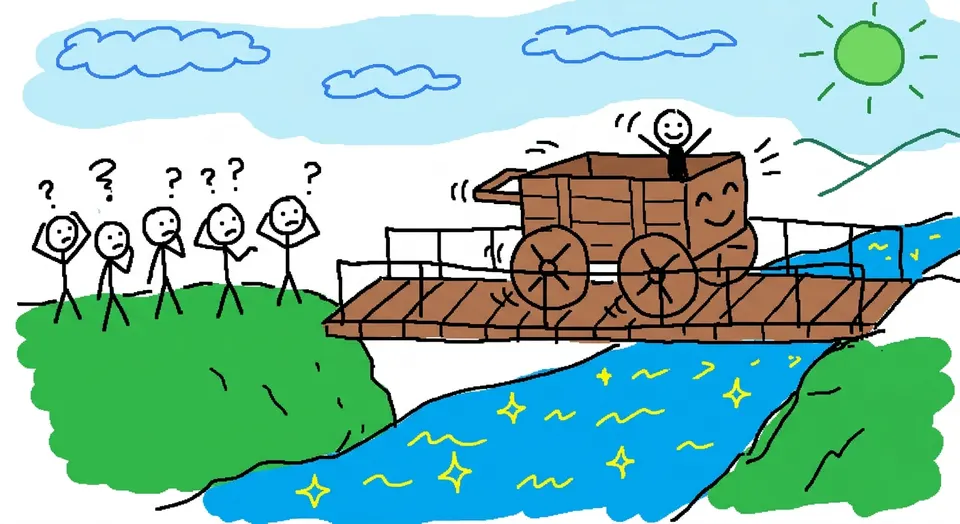
The Hangang Bridge opened on October 7, 1917, as the first road bridge over the Han River. Before it, the Hangang Railway Bridge had been built in 1900, but the Japanese side that held the railway construction rights skipped a pedestrian walkway, citing construction costs. Back then there were hardly any private cars, and people mostly crossed the river by boat, so it was assumed that few people would need a walkway.
As cars became more common and more people wanted to cross the river, the Japanese Government-General of Korea planned a road bridge, and the Governor-General and figures like Lee Wan-yong attended the opening ceremony. Later, in the great Eulchuk flood of 1925, the middle section collapsed, and it was such a big event that people said "the Han River bridge has been washed away." In 1950 it was blown up to block the escape route, which cut off northern residents' way south to evacuate.
The bridge has also been called the "First Hangang Bridge" (Je-1 Hangang Bridge) to tell it apart from the other bridges nearby. It has linked the north and south sides of Seoul for more than a century, with Nodeul Island right beside it.
The higher the number, the more useless the story
Uselessly fun?
Key facts
- The Hangang Bridge opened in 1917 as the first road bridge over the Han River, and it was originally called the Hangang Footbridge (Hangang Indogyo).
- The original design left out a sidewalk and was built mainly for vehicles, so pedestrian crossings only took hold much later.
- In 1950 it was blown up to defend the Han River line, was rebuilt in 1958, and in 2020 became Seoul's Registered Cultural Heritage No. 1.
Q. Are there any signs of pedestrian-blind design in the bridges around your neighborhood?
Read the originalKorean Wikipedia ↗This story was rewritten from a Korean Wikipedia article, so it's used under CC BY-SA 4.0 (attribution, share alike).
AI read the Korean Wikipedia article and rewrote it in its own words (in Korean, then machine-translated). It is not a translation of the original. It passes our review rules before going up, but please check the original for exact details and photos. Correction or removal requests from rights holders are handled within 24 hours.