

Odd News
History · Published November 10, 2026
The Vivid Red Pigment the Maya Used May Have Poisoned Lake Water and Food
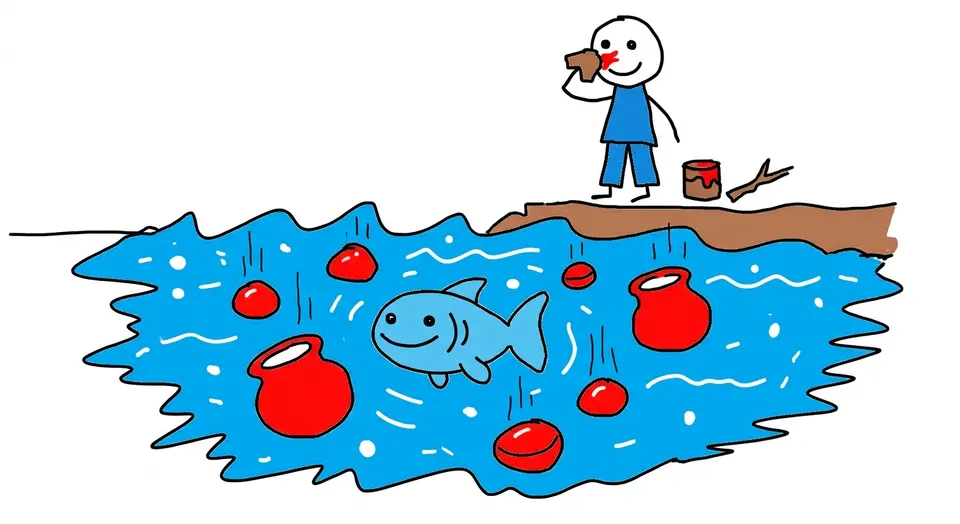 AI doodle
The Maya used cinnabar, a bright red ore, to paint pottery, tombs, and building surfaces. About 86 percent of this ore was mercury. Mercury is a toxic substance that harms people, animals, and entire ecosystems alike.
A recent study analyzed lakebed sediments near Coba and Sicachi in the Yucatán Peninsula. Mercury levels during the Maya period were extremely high. At certain points, they exceeded the U.S. Environmental Protection Agency's drinking water standard by more than a thousand times. The researchers believe this mercury reduced fish, clams, and other aquatic life in the lakes.
Cinnabar doesn't occur naturally in this area, so it was likely brought in from elsewhere. If so, it may have been one of the valuables traded across the Maya world, like jade and obsidian. However, how much mercury contamination contributed to the decline of major cities remains unclear.
The higher the number, the more useless the story
Uselessly fun?
Key facts
- The Maya widely used cinnabar, a mercury-rich ore, to decorate pottery, tombs, and buildings.
- Lake sediments in the Yucatán Peninsula of Mexico show very high levels of ancient mercury.
- The mercury contamination period coincided with fewer aquatic animals, and people who ate fish may have been exposed to mercury.
Q. What traces have the materials we've long used to make things beautiful left on our environment today?
Read the originalSmithsonian Smart News ↗AI read the Smithsonian Smart News article and rewrote it in its own words (in Korean, then machine-translated). It is not a translation of the original. It passes our review rules before going up, but please check the original for exact details and photos. Correction or removal requests from rights holders are handled within 24 hours.